
Soggy Shelves & Soaked Records: Flood Response Lessons from Savannah’s Recent Storm
Flooding Can Be a Slow-Burn Disaster
Though Tropical Storm Debby weakened before landfall in early August 2024, Savannah saw about 8 in of rain in just 24 hours. The storm stalled offshore, dumping rain and, overwhelming drainage systems. In its aftermath, local museums, libraries, and archives didn’t face wind damage—they faced prolonged moisture exposure, sewer backups, and mold threats that could compromise collections long after the storm passed.
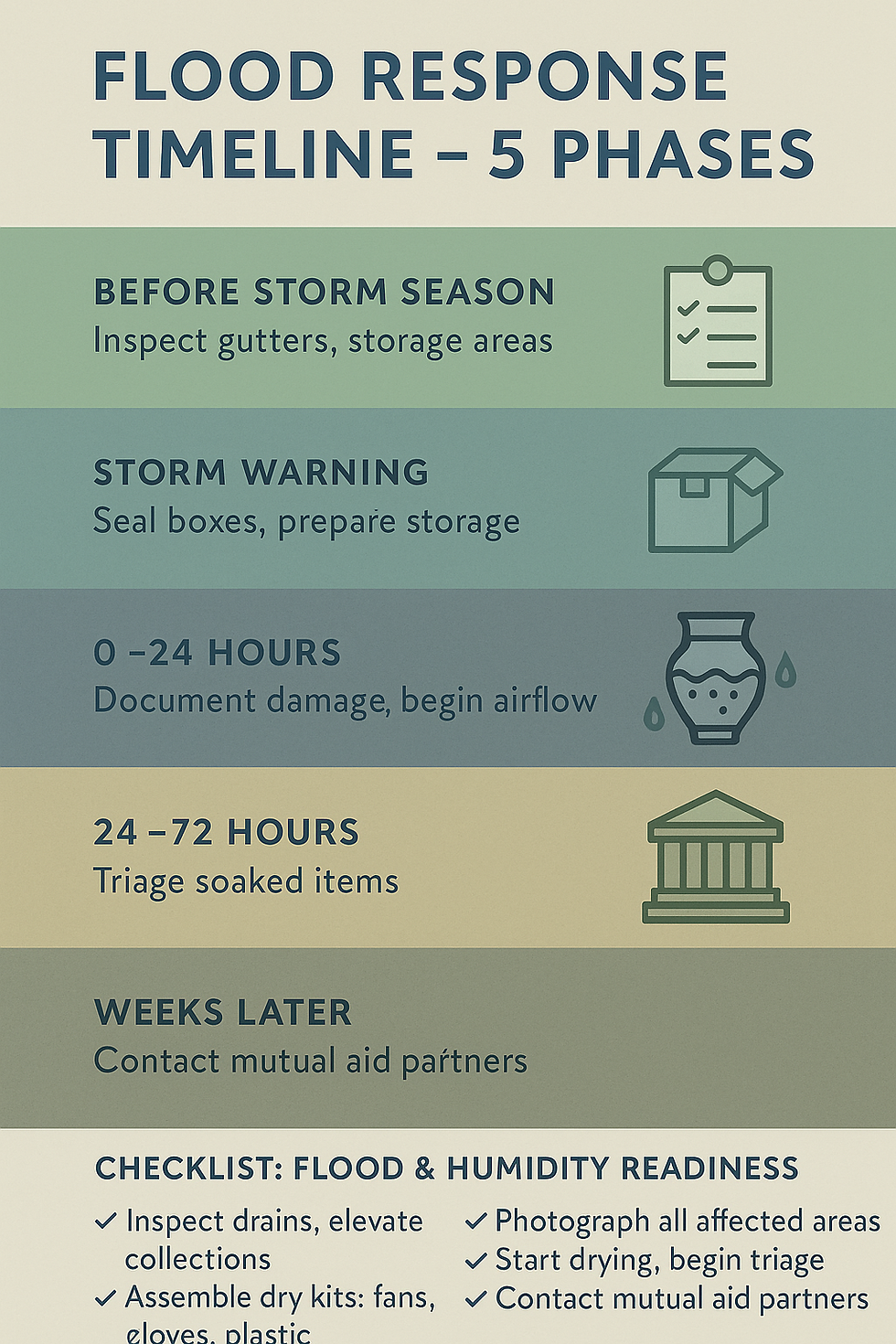
Actionable Tips for Water Events
Test drainage systems now: Savannah’s flat terrain and historic stormwater limits make it prone to backups, similar situations can exist across the state, its best to maintain your drainage systems
Pre-label “wet bins” — set aside clear, stackable containers for fast drying or freeze storage.
Elevate collection materials, tech, and HVAC controls above baseboards to prevent damage from even minor seepage.
Stock quick-dry kits with fans, desiccant packs, portable dehumidifiers (if power allows), plastic sheeting, and other materials.
Connect with local agencies—e.g., your county EMA, city wastewater teams—for early alerts--if you've signed up for our listserv, we will also send state-wide and region-wide alerts for larger storm systems.
Checklist: Flood & Humidity Readiness
Before the Rain
Inspect and clear drains, gutter systems, and sump pumps
Elevate materials (≥6″) in moisture-prone rooms
Assemble dry kits: fans, gloves, plastic, documentation tools
Backup digital and digitize essential records off-site
During Storm Watch/Warning
Unplug electronics, protect HVAC controls
Prepare documentation tools for post-storm
Monitor spaces as you're able, in-person or remotely
0–72 Hours Post-Event
Photograph all affected areas before moving items
Start drying: air circulation and dehumidifiers if power available
Begin triage: freeze, dry-clean, or stabilize items
Contact mutual aid partners
Weeks Later
Inspect for mold, mildew, odors
Revisit building improvements—raise shelving, upgrade drainage
Conduct staff debrief and refresh emergency plan
Savannah’s 2024 flooding from Debby shows that the slow creep of water can damage collections just as badly as fierce winds. Now is the time to plan: test your drainage, elevate your collections, and reconnect with emergency partners.


Comments